
August 17, 2026

• Caitlin Finley and Will Woodson [http://woodsonfinley.com], “Once Through the Hall”
Principal Personnel: Caitlin Finley (fiddle), Will Woodson (uilleann pipes, flute)
Distinctive Tracks: “The Geese in the Bog”; “The Blackbird”; “The Plains of Boyle/Lawson’s”; “Willie Taylor’s March/The Harp That Once Through Tara’s Hall”; “Kiss the Maid Behind the Barrel/Trim the Velvet”
Arguably, anyone who plays traditional music helps to preserve and promote history, but the Maine-based duo of Finley and Woodson makes a point of upholding the legacy of Irish-American music from the 1920s and ’30s, drawing on recordings from the likes of Sligo-born New York fiddlers Michael Coleman, Paddy Killoran, and James Morrison, as well as Donegal fiddlers Mickey and John Doherty, and Leitrim-born flute player John McKenna, among others. Their previous album, “The Glory Reel,” with accordionist-pianist Chris “Junior” Stevens, evoked the music of dance halls, vaudeville theaters, and house sessions from that era.
On “Once Through the Hall,” Woodson and Finley again showcase this storied brand of Irish traditional music while imbuing it with a freshness and immediacy. As before, they play in unison and – for most of the tracks – very up-tempo, but never sound frenzied or out of control. While their arrangements are basic and straightforward, each uses elements of their respective instruments to add texture: Finley’s periodic switch to the low octave makes for a pleasing contrast, while Woodson employs his pipes’ regulators judiciously for rhythm as well as harmony, and his flute-playing often has an almost percussive quality to it.
They start off with a blazing pair of reels, “Peeler’s Jacket/Duke of Leinster,” which serves as homage to a 1929 recording of that medley by the celebrated fiddle-pipes duo of Morrison and Mayo’s Michael Carney. Woodson and Finley also find nuggets from other sources, perhaps not as well-known but no less venerable – notably a delightful trio of flings (“Pride of Clyde No. 1/Drummer Boy/Pride of Clyde No. 2”) credited to recordings by the Four Provinces Orchestra of Philadelphia. (They also provide informative and interesting liner notes for each track.)
Those who like hearing, and learning, different versions or settings of familiar tunes will enjoy the duo’s performance of “Geese in the Bog” as played by Carney – earlier in the album they include a more well-known iteration as part of a medley with “Tom Busby’s,” named for a student of Carney – and a set by piper Tom Ennis that combines “Kiss the Maid Behind the Barrel” and “Trim the Velvet” into one eight-part reel.
When it comes to sheer expressiveness and emotionality, Finley and Woodson excel on a pair of marches, combining “Willie Taylor’s March” (which has an intriguing alternate title of “I Won’t Be a Nun”) with “The Harp That Once Through Tara’s Hall,” a popular tune in New York City dance halls during the 1920s and ’30s. While marches – no matter their origin – tend to have a strong martial element, obviously, it’s also true that they are meant to evoke pride and camaraderie, and Finley and Woodson mine those characteristics to great effect.
As a change of pace, there are also solo tracks: Finley on the reels “Rakish Paddy/Sweeney’s Dream,” while Woodson’s piping is spotlighted on “The Blackbird” (the air, not the hornpipe) and his flute on the reels “McKenna’s Fermoy Lasses/Bloom of Youth.”
One of the best things about this album, and Woodson and Finley’s body of work in general, is how it reminds us that there have always been innovators and tinkerers who put their own stamp on the Irish/Irish-American music tradition, and helped it to thrive and endure.
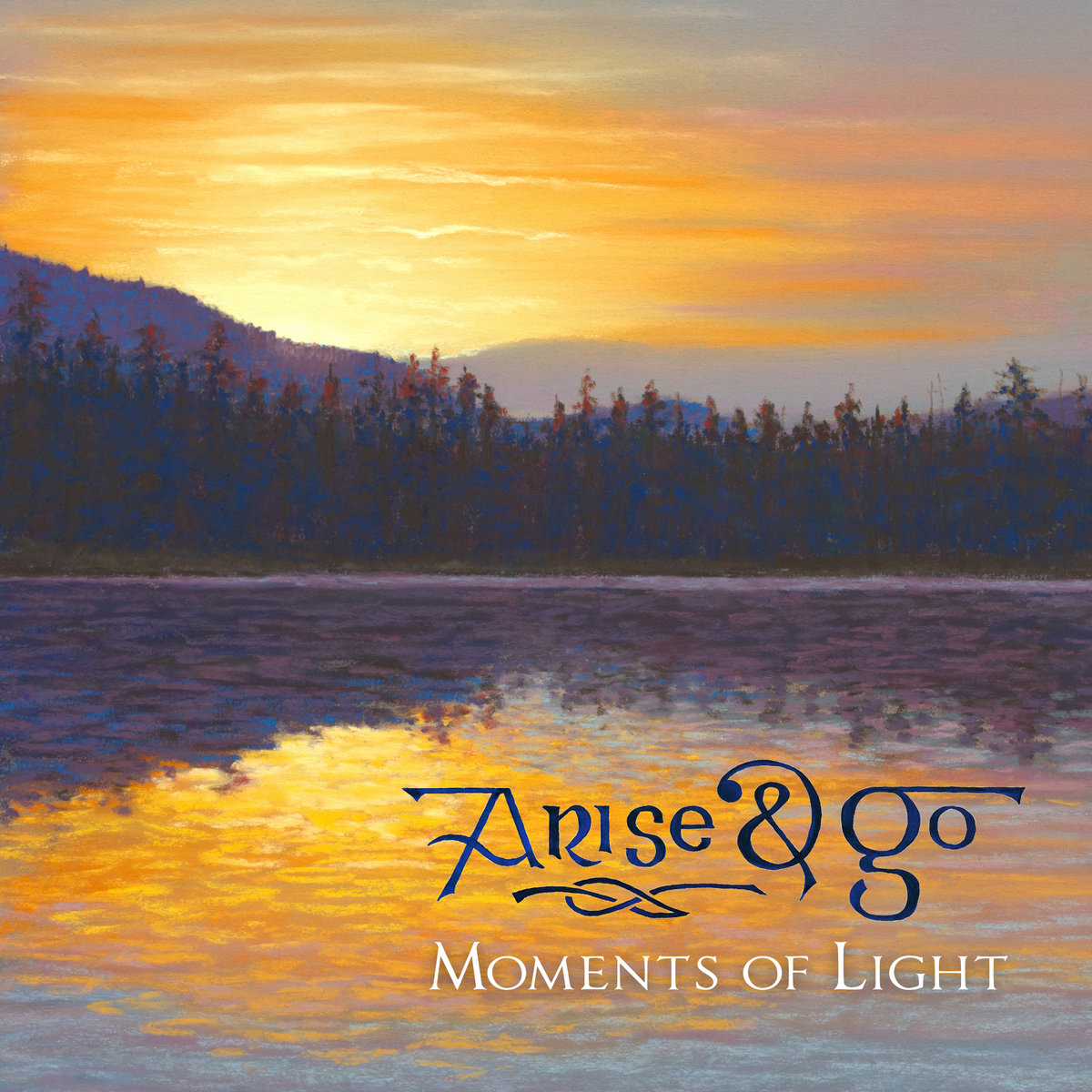
•Arise & Go [http://ariseandgo.org], “Moments of Light”
Principal Personnel: Ellie Goud (fiddle); Tim Ball (guitar, foot percussion, harmony fiddle);
Michael Roddy (uilleann pipes, border pipes, small pipes, whistles)
Notable Guests: Cara Wildman (bodhran), Nicholas Williams (accordion), Joey Arcuri (bass, cello)
Distinctive Tracks: “Bonnie Ellen Owen/Samuel the Weaver/Pat & Al’s/Chloe’s Passion”; “Jos Cormier/Jock Broon’s 70th”; “Munlochy Bridge/The Editor’s Favourite/Portencross Castle/Mackinnon’s Other Rant/Attwood O’Connor’s/Dr. Alasdair MacKenzie’s/The Lassie’s Fashion/The Primrose Lass”
Arise & Go connects the Irish and Scottish instrumental traditions with those of Atlantic/French Canada in inspired, cohesive and often inventive fashion. This much-anticipated follow-up to the trio’s 2019 debut, “Meeting Place,” displays a band that has, if anything, upped its game: the musicianship is solid; the selection of material – both traditional and contemporary – is canny; and their arrangements entertain without overshadowing the music. Roddy tends to command most of the attention by his mastery of three different varieties of bagpipes (his collection of reeds must warrant a room all its own), but there’s no overlooking Goud’s exuberant fiddling or Ball’s adroit rhythmic turns.
All these virtues are well represented on the track which opens with Roddy playing small pipes on a 2/4 quickstep march, “Bonnie Ellen Owen,” over a swirling fiddle riff and steady guitar in back. Fiddle and guitar take the lead second time through, and then Ball triggers the transition into the festive A-mixolydian jig “Samuel the Weaver” followed by the equally jovial Liz Carroll composition “Pat & Al’s” – led by Goud – before a dramatic turn into a 9/8 Angus MacDonald jig, “Chloe’s Passion,” jumpstarted by Roddy’s highland pipes and Cara Wildman’s bodhran.
After pulling together such a diversity of moods and textures, the next track feels more sedate, but certainly not lacking for vitality: Roddy’s “Voices Late at Night” and a pair of Acadian/French Canadian tunes (“Avila LeBlanc” and “Cos Reel”) with him switching to low whistle and Ball doubling on foot percussion, while Goud’s fiddling provides that characteristic Maritimes lift; an appearance by Nicholas Williams, accordionist for Quebecois trio Genticorum, adds to the north-of-the-border ambiance.
Another set comprises a trio of tried-and-true Irish reels that Bothy Band aficionados in particular will appreciate (all three tunes were stalwarts of the group’s repertoire). The track opens with a lovely uilleann pipes-led moderate-tempo overture segueing into Junior Crehan’s “Otter’s Holt”; Goud joins in on a reprise of the opening passage the second time through, and then the band heads into the A-dorian “Curragh Races” and the D-mixolydian “Road to Lisdoonvarna.”
The band’s talent for creative, just-plain-fun arrangements is particularly notable on “Jos Cormier/Jock Broon’s 70th.” Ball’s pulsing rock-star strumming and foot percussion sets up Goud’s entry on the first reel (widely known as “MacDonald’s March”), composed by fiddler Joe Cormier, a Waltham resident with Acadian roots who grew up playing Cape Breton style. After Roddy joins in on highland pipes for a couple of run-throughs, they return to the build-up, adding Goud’s and Ball’s fiddles to enhance the verve, until Roddy takes off on an up-tempo version of “Jock Broon’s,” a piece by talented, tragic Gordon Duncan.
Capping the album is a mammoth set of – count ’em – eight different tunes, including two from the Prince Edward Island tradition (“Portencross Castle” and “Attwood O’Connor’s”), a Cape Breton strathspey (“Editor’s Favourite”) and a Scottish reel, “Lassie’s Fashions,” that swings between A major and F-sharp minor. They pull it off with aplomb, and in less than six minutes to boot.
Although mainly based in New York state, all available information (in other words, a Google search) indicates Arise & Go has not yet appeared in the Greater Boston area. Seems like it’s high time to remedy that.